


She was dedicated on 28 October 1886. For her 140th anniversary, talk face to face with the sculptor, the engineer, the architect and the poet who made her. Your first two minutes are free, and your email gets you three more.
Up to five free minutes · no card · see the plans
Ask Bartholdi how a statue that tall was built in a Paris workshop. Ask Eiffel what holds her up from the inside. Ask Richard Morris Hunt how the pedestal came together on Bedloe’s Island, and ask Emma Lazarus what she meant by the “Mother of Exiles.” Liberty140 brings the people behind the Statue of Liberty to life as Synth Humans® — photoreal, real-time figures you can see, hear and talk with. Not a plaque. Not a chatbot. A conversation that answers back.
On 28 October 1886, a copper woman holding a torch was dedicated in New York Harbor: a gift from the people of France to the people of the United States. It took a French professor’s idea, a sculptor’s decades, an engineer’s iron skeleton, an American architect’s pedestal and a poet’s sonnet to make her what she is. For her 140th anniversary, Liberty140 lets you meet them.
Five builders, one statue. Start with Bartholdi, or choose anyone directly. Every plan includes every figure, and the free minutes are shared between them.
Each figure keeps their own notes on you. Ask Eiffel about wind loads today and he remembers where you left off. What you tell one figure does not travel to another.
What these are, and what they are not. These are AI portrayals built from the historical record: the figures’ own writing, their letters and what historians know about them. They are not the real people, they do not speak for those people’s families or institutions, and they can be wrong — a date, a detail, or what someone would actually have thought. They lived in the nineteenth century, with some views we now reject; Liberty140 is designed to discuss that history honestly, not to endorse it. For anything that matters, check a good source.
Liberty140 is an independent project of Sizzle, Inc. It is not affiliated with, endorsed by or sponsored by the National Park Service, the Statue of Liberty–Ellis Island Foundation or any government agency.
If something strikes you as careless, inaccurate or disrespectful, please . Every report reaches a real person.
Your first two minutes need nothing from you: no sign-up and no card. When they run out, add your email and keep going for three more. Move between figures whenever you like — the free clock is shared, and each figure starts with their own clean notebook.
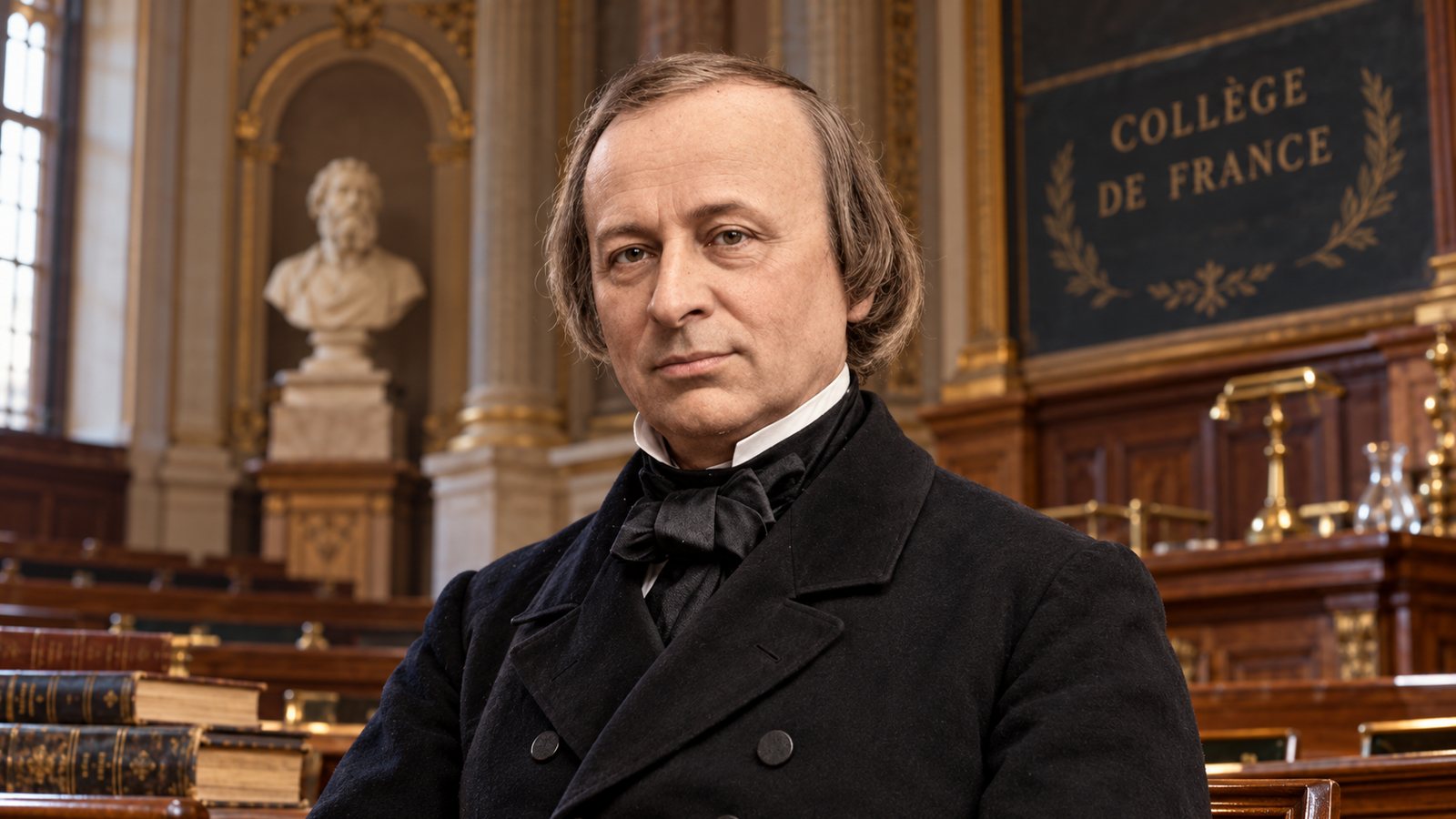
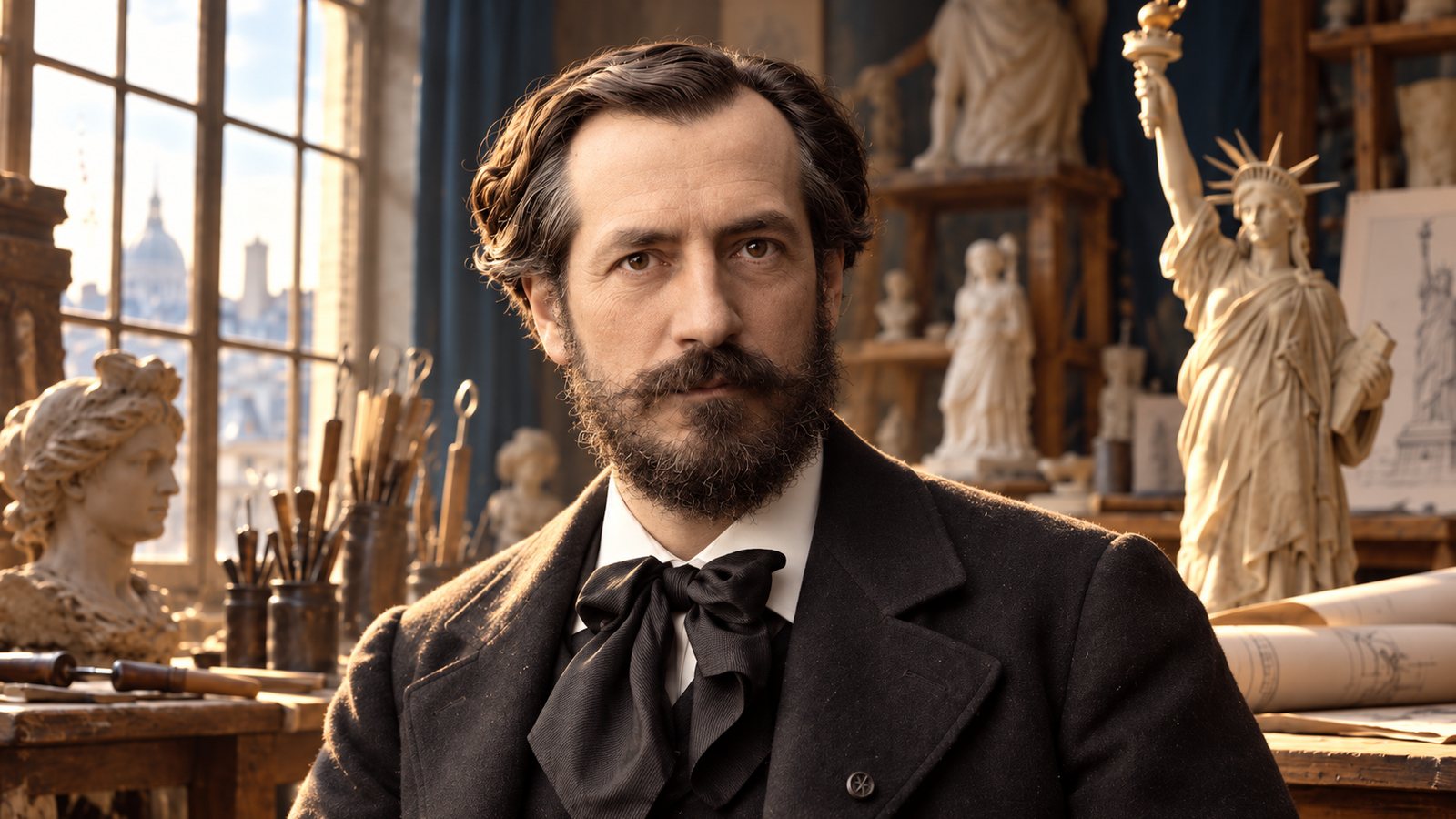
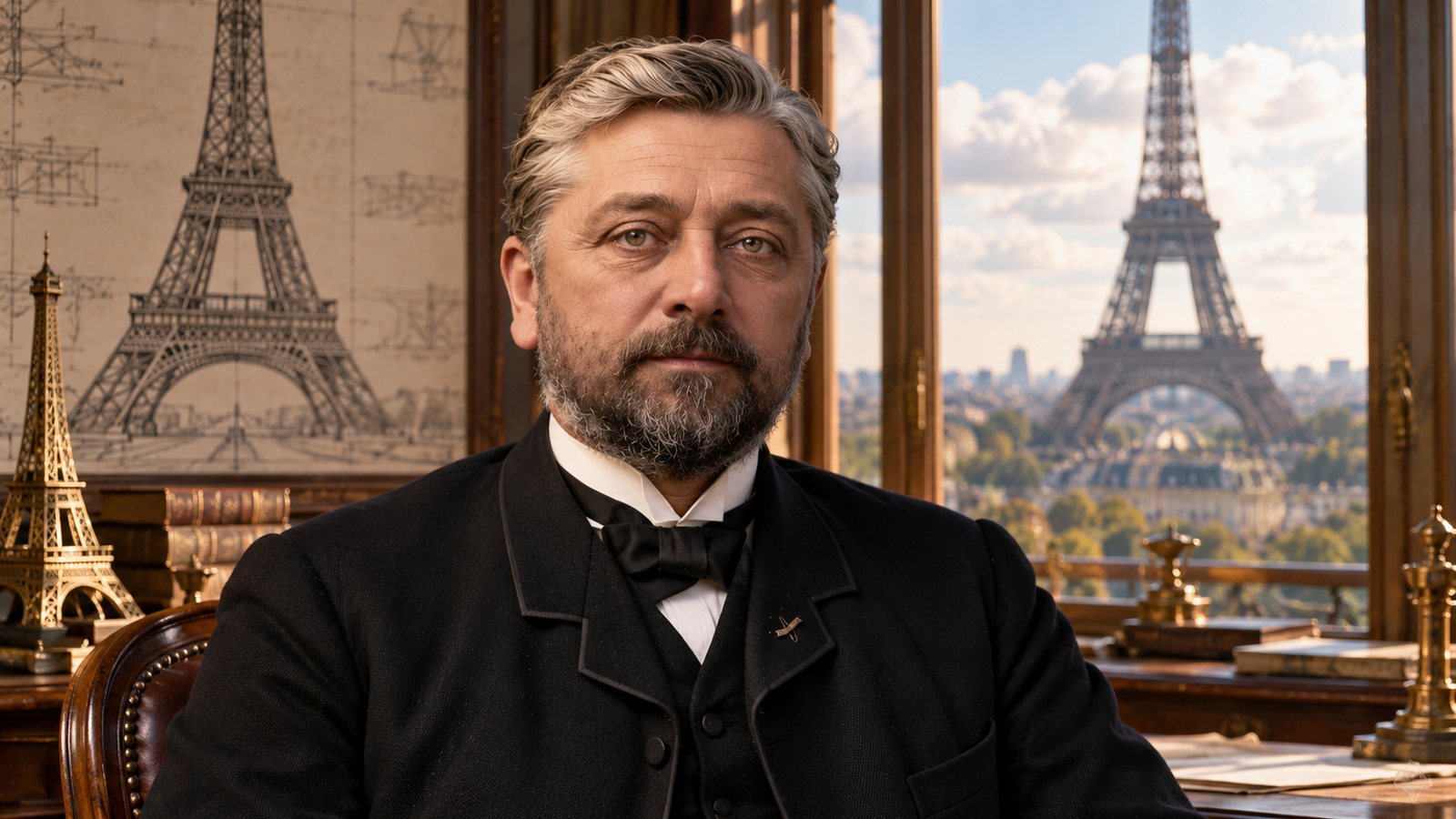


A strong Wi-Fi or 5G connection is needed for live conversation. The free clock starts once your call has had a moment to connect. Free minutes are one set per person, shared across every figure. When they run out, pick a plan or a one-time 30 minutes and carry straight on.
The man who imagined her, the sculptor who shaped her, and the engineer who taught her to stand in the wind.
“Come in. Let me tell you why a Frenchman wanted to give America a statue.”
A French legal scholar, a committed abolitionist and a lifelong admirer of the American Constitution, Édouard de Laboulaye is credited with proposing, in 1865, a monument from the people of France to the people of the United States: a tribute to American independence and to liberty itself. He led the Franco-American Union that raised the money in France, and died in 1883, three years before the statue was dedicated. Ask him about the idea, the politics of his day, and why a gift can carry a message.
“Bonjour! She took me years. Ask me anything about her.”
Born in Colmar, in Alsace, Frédéric Auguste Bartholdi designed the statue whose official name is Liberty Enlightening the World. He sailed into New York Harbor in 1871 to choose her island, then spent years raising money and building her in a Paris workshop from thin sheets of hammered copper. Ask him how a sculptor works at that scale, why she carries a torch, and what he wanted her to say.
“You see her copper. Let me show you what holds her up.”
Years before the tower that carries his name, Gustave Eiffel engineered the statue’s hidden structure: a tall iron pylon and a flexible framework that lets the thin copper skin move with wind and heat while she stands firm. He took on the work after the death of the first engineer, Eugène Viollet-le-Duc. Ask Eiffel about structure, about wind, and about building things that are meant to last.
The architect who gave her somewhere to stand, and the poet who gave her a voice.
“She needed something worthy to stand on. That was my job.”
The first American architect to study at the École des Beaux-Arts in Paris, Richard Morris Hunt designed the granite pedestal that lifts the statue above the harbor, set inside the star-shaped walls of old Fort Wood on Bedloe’s Island. Paying for the pedestal was America’s half of the bargain, and for a while it nearly stalled. Ask Hunt about designing for a giant, and about how American architecture came of age.
“Sit with me. Let me read you the poem, and tell you why I wrote it.”
A New York poet, essayist and advocate for refugees, Emma Lazarus wrote “The New Colossus” in 1883 to help raise money for the pedestal. She died in 1887, and in 1903 her sonnet was placed on a bronze plaque inside the pedestal. Her words made the statue a welcome. Ask her about poetry, about the refugees she worked with, and about the “golden door.”
Emma Lazarus, 1883
Not like the brazen giant of Greek fame,With conquering limbs astride from land to land;Here at our sea-washed, sunset gates shall standA mighty woman with a torch, whose flameIs the imprisoned lightning, and her nameMother of Exiles. From her beacon-handGlows world-wide welcome; her mild eyes commandThe air-bridged harbor that twin cities frame.“Keep, ancient lands, your storied pomp!” cries sheWith silent lips. “Give me your tired, your poor,Your huddled masses yearning to breathe free,The wretched refuse of your teeming shore.Send these, the homeless, tempest-tost to me,I lift my lamp beside the golden door!”
Placed on a bronze plaque inside the pedestal in 1903.
How an idea in France became the figure in New York Harbor.
Dates are given conservatively from the historical record. If you spot an error, please .
No lectures you have to sit through. You lead the conversation, and they answer the way they would have.
“Why a torch?” “What holds her up?” “Who did you write the poem for?” Big or small, plain words are all it takes.
Ask why. Push back. Ask for an example. It is a conversation, so the next question is always yours.
Each figure remembers your last conversation, so the next one builds on it instead of starting from zero.
It is worth being exact about what an AI portrayal of a historical figure is.
Your first two minutes need nothing from you. After that we ask for an email, for two reasons: it is how your minutes stay yours, and it is how each figure remembers your last conversation. We will send the occasional note when new figures arrive, and you can unsubscribe from any email.
Every plan includes every figure, and every new arrival. Only your minutes vary. Start free, then pick the plan that fits — or buy 30 minutes once, with no subscription.
Buy 30 minutes once, with every figure included. No subscription, nothing renews.
You get a moment to finish the thought before a conversation closes. After that, three simple choices.
The best value in the house. Your new minutes start right away and the price difference is prorated.
One time, never renews, and no plan needed.
Your minutes refill on your billing date, and anything unused rolls over.
Every plan includes every figure. Plans bill monthly and renew until cancelled; cancel anytime. Unused minutes roll over. Yearly plans are billed once for twelve months and deliver thirteen months of access. All prices in US dollars.
Liberty140 is built with the same casting, voice and design rigor behind every Sizzle Studios Synth Human®.
A Synth Human is a photoreal, real-time conversational AI persona — built with the same casting, voice-direction and visual-design rigor Sizzle Studios has brought to entertainment since 1979.
And get a real answer back — not a recording, not a menu, not a page of search results.
The statue from its sculptor. The skeleton from its engineer. The poem from its poet.
Before a visit to the harbor, after the documentary, or the night before a history test.
We use your email to hold your free minutes and to send the occasional note when new figures arrive. Unsubscribe from any email. We never sell it.